Arden Pond is the largest open-water space along the American River Parkway. For hundreds of migratory waterbirds traveling the Pacific Flyway, it is a critical nighttime roost during the winter months—a place to rest safely away from predators. It also provides shallow refuge for juvenile fish, including salmon, and sits next to the largest heron and egret rookery on the river. That rookery hosts over 15 nests each year, including one regularly used by a Great Horned Owl. Those birds feed in the pond while raising their young before dispersing along the river.
In recent years, invasive aquatic primrose has overtaken large sections of the pond. The dense mats snag fishing line cast from the deck. When anglers cut the line free, it creates a dangerous entanglement hazard for waterbirds, turtles, and other wildlife that live in and drink from the pond. Community reports of gear and entangled waterbirds led us to find a solution.
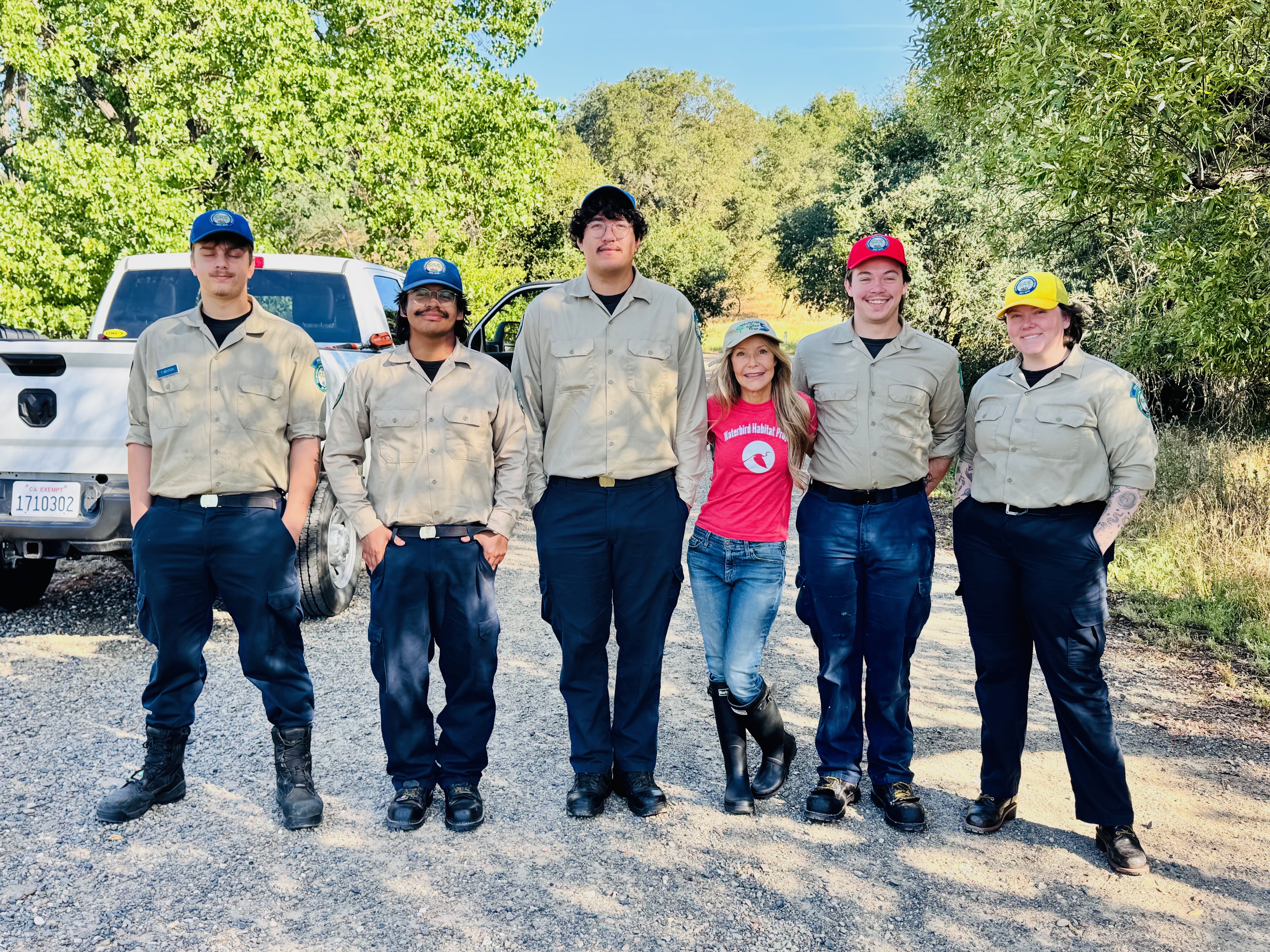
What began with determined volunteers in boats and kayaks grew into something larger. Last June, the Sacramento CCC joined us for a full month and helped haul away more than 40 dump trucks of primrose. The difference was visible—but the work wasn’t finished.
This summer the Sacramento CCC crews returned with the same energy and purpose, picking up right where we left off on the right side of the fishing deck. May to June, working from shore and from a jon boat, crews pulled primrose by the armful, waded into the shallows, and cleared limbs heavy with abandoned gear. Day by day the open water returned. By the final day we were pulling clean primrose—no tangled line, no hooks—just plants coming out of a stretch of pond that had been reclaimed.
We also spent time on trail maintenance, planting willows, and restoring the drain at Turtle Pond at Sailor Bar. More on that project in a future post!
Thank you to the Sacramento CCC crew for their hard work, positive spirit, and continued partnership. Thank you also to Sacramento County Parks for ongoing support with disposal and access. Together we are restoring open water and safer habitat at one of the American River’s most important places for waterbirds and fish.
We look forward to the next chapter of this work!
